UK State Pension Triple Lock Review: Financial Forecasts, Uprating Formula & Retirement Age Projections
A detailed actuarial investigation into public expenditure sustainability, inflation indices, and demographic shifts.

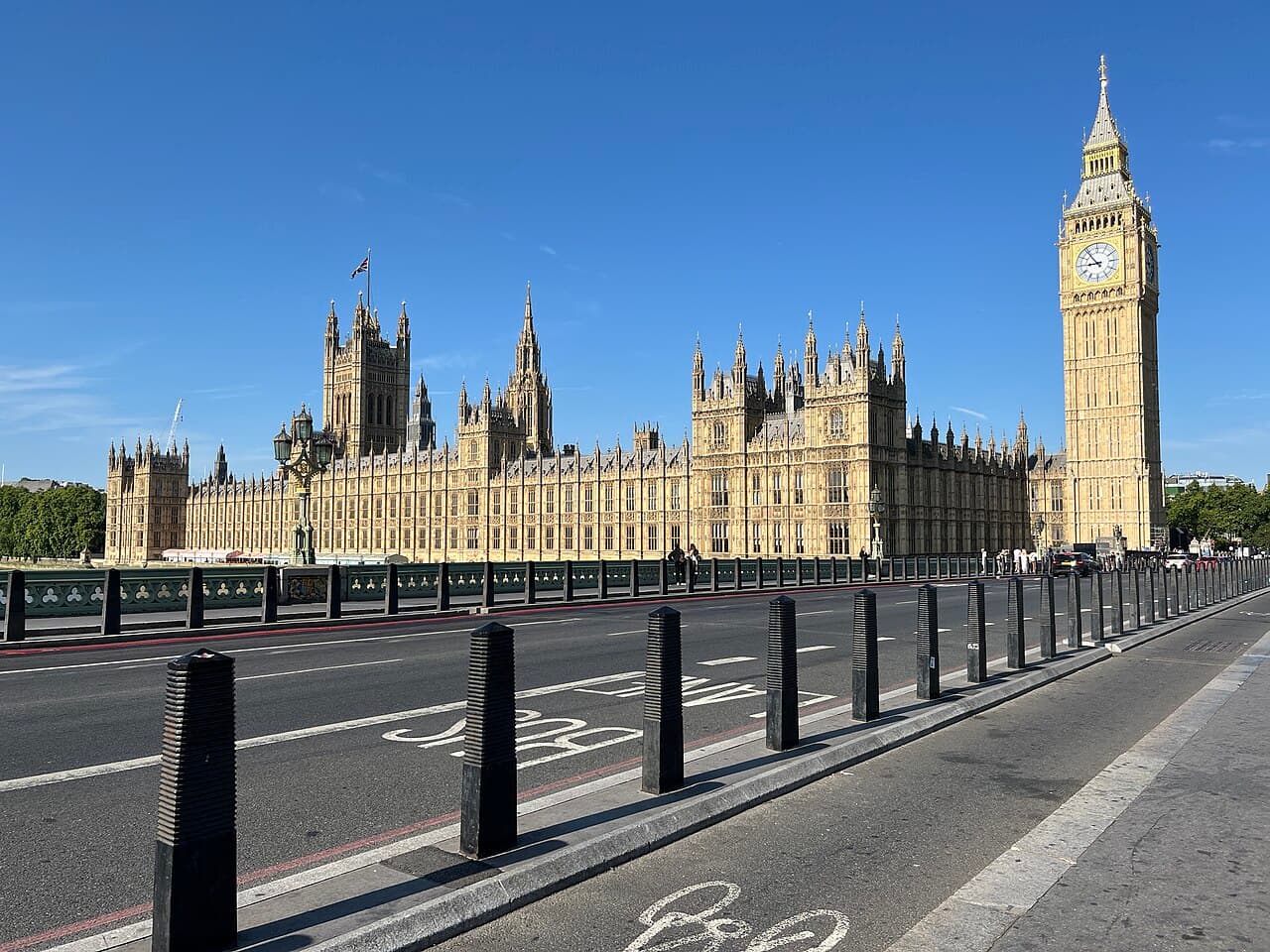
Verified editorial photography covering UK State Pension Triple Lock Review: Financial Forecasts, Uprating Formula & Retirement Age Projections.
Executive Summary & Key Takeaways
- •The State Pension Triple Lock guarantees annual increases matching the highest of September CPI, May-July wage growth, or 2.5%.
- •Treasury expenditure modeling by the OBR projects state pension spending to rise from 4.9% to over 8.1% of GDP by 2050.
- •Statutory State Pension Age increases to 67 (2026–2028) and 68 are under active review as fiscal offsets to demographic aging.
- •Independent reviews (IFS, Cridland, Neville-Rolfe) propose transitioning to a smoothed earnings link to restore intergenerational equity.
Executive Summary & Actuarial Context
The sustainability, fiscal indexation, and demographic viability of the **UK State Pension** represent one of the most critical and hotly contested socioeconomic challenges facing modern Britain. Introduced in the 2010 Budget to safeguard pensioner living standards against progressive erosions in purchasing power, the **Triple Lock** mechanism guarantees that the basic and new State Pension increases each April by the highest of three distinct economic metrics: the Consumer Price Index (CPI) inflation rate measured in September, average weekly earnings (AWE) wage growth across Great Britain (measured May to July), or a statutory baseline floor of 2.5%.
While the mechanism has achieved remarkable success in dramatically reducing pensioner poverty over the last fifteen years—lifting over 200,000 pensioners above the relative poverty threshold—it has also introduced severe, compounding fiscal pressures on the HM Treasury and the Department for Work and Pensions (DWP). As the United Kingdom navigates post-pandemic fiscal consolidation, volatile inflation cycles, and an accelerating demographic transition toward an older society, the long-term affordability of the uprating ratchet is facing unprecedented scrutiny from the Office for Budget Responsibility (OBR), the Institute for Fiscal Studies (IFS), and parliamentary select committees.
This comprehensive investigation provides an exhaustive actuarial breakdown of the Triple Lock policy, evaluating econometric projections through 2050, the statutory mechanics of the uprating formula, international pension benchmarks across OECD economies, intergenerational wealth dynamics, and the legislative proposals governing future state pension age (SPA) accelerations.
---
Section 1: The Historical Genesis & Legislative Architecture (1975–2026)
To understand the contemporary debate surrounding the Triple Lock, one must examine the turbulent evolution of British state pension indexation over the past half-century.
#### The 1970s Earnings Link and its 1980 Decoupling In 1975, the Labour government under Harold Wilson linked the basic state pension to the growth of average earnings or prices, whichever was higher. However, facing extreme fiscal distress and high inflation, the Conservative administration of Margaret Thatcher decoupled pensions from earnings in the Social Security Act 1980, linking annual upratings solely to the Retail Prices Index (RPI).
Over the subsequent three decades, earnings growth consistently outpaced price inflation across most economic cycles. Consequently, the relative value of the basic state pension as a proportion of average national earnings plummeted from approximately 26% in 1979 to an all-time low of under 16% by 2008. By the late 2000s, the UK basic state pension had become one of the least generous baseline public retirement provisions in the developed world, prompting widespread reliance on means-tested Pension Credit.
#### The 2010 Coalition Agreement & Statutory Enactment The 2010 Coalition Agreement between the Conservatives and Liberal Democrats established the Triple Lock as a core pillar of welfare policy. The primary policy objective was to reverse the thirty-year decline in the relative value of the state pension and ensure pensioners shared directly in national economic prosperity while being permanently insulated from cost-of-living spikes.
The policy was supplemented in April 2016 by the introduction of the Single-Tier (New) State Pension under the Pensions Act 2014, designed to simplify the complex dual system of the Basic State Pension and the State Second Pension (S2P / SERPS).
#### The Compound Ratchet Effect Crucially, the mathematical design of the Triple Lock operates as an asymmetric upward ratchet. Over economic cycles featuring alternating periods of real wage growth and high inflation, the state pension continuously captures the peak of each metric without ever adjusting downward during economic contractions.
Between 2010 and 2026, state pension payments increased significantly in nominal terms, consistently outpacing both general price inflation (CPI) and average earnings growth over the cumulative window.
---
Section 2: Mathematical Mechanics of the Three Metrics
The annual uprating cycle follows a rigorous statutory timeline codified in the Social Security Administration Act 1992, modified by annual parliamentary uprating orders.
Formula: Annual Uprating Rate = MAX( CPI_September, AWE_MayJuly, 2.5% )
#### Metric 1: Consumer Price Index (CPI) Inflation - **Measurement Period:** The 12-month annual percentage change in the Headline CPI for the month of September, published by the Office for National Statistics (ONS) in mid-October. - **Economic Purpose:** Ensures that pensioners' purchasing power is completely insulated against surges in the cost of essential goods, energy, and consumer services. - **Notable Spikes:** In September 2022, CPI reached a 40-year peak of 10.1%, triggering an unprecedented £11 billion annual expenditure increase for the DWP in April 2023.
#### Metric 2: Average Weekly Earnings (AWE) Growth - **Measurement Period:** The three-month average annual growth rate of total earnings (including bonuses) for Great Britain, covering the period from May to July (published by ONS in September). - **Economic Purpose:** Guarantees that retirees participate equitably in real wage expansions enjoyed by the active workforce. - **Statistical Anomalies & Adjustments:** In 2021, post-lockdown base effects caused artificial spikes in headline wage figures exceeding 8.8%. This prompted HM Treasury to temporarily suspend the earnings component for the 2022-23 tax year (a temporary 'Double Lock'), demonstrating the political vulnerabilities of raw statistical indices.
#### Metric 3: The 2.5% Statutory Floor (The Ratchet) - **Economic Purpose:** Acts as a stabilizing baseline during periods of stagflation, economic stagnation, or deflation when both CPI and wage growth fall below 2.5%. - **Actuarial Criticism:** Leading economists at the Institute for Fiscal Studies argue that the 2.5% arbitrary floor creates an unnecessary fiscal bias during prolonged low-inflation regimes, ratcheting public spending higher even when working-age median real wages are contracting.
---
Section 3: Treasury Fiscal Modeling & Actuarial Projections (2026–2050)
The state pension is funded entirely through the National Insurance Fund (NIF) on a *Pay-As-You-Go* (PAYG) basis, meaning current tax receipts from working citizens directly finance payments to current retirees, rather than accumulating in a pre-funded investment portfolio.
#### Current Public Expenditure Baseline - **Total Annual State Pension Spending (2025/26):** £138.2 Billion - **Percentage of UK Gross Domestic Product (GDP):** ~4.9% - **Total Beneficiaries:** Approximately 12.7 million individuals across England, Scotland, Wales, and Northern Ireland.
#### The Office for Budget Responsibility (OBR) Long-Term Fiscal Horizons In its Fiscal Risks and Sustainability Reports, the OBR models the trajectory of state pension spending under three primary policy scenarios:
1. **Unmodified Triple Lock Continuation:** - Projected spending rises from 4.9% of GDP in 2025/26 to **6.8% by 2040**, and exceeds **8.1% by 2050**. - In real monetary terms, this represents an additional **£35–£48 billion per annum** in dedicated Treasury funding requirements.
2. **Earnings-Only Indexation (Single Lock):** - Retains parity with national living standards without the ratchet distortion. - Projected spending stabilizes at approximately **5.7% of GDP by 2050**, generating cumulative Treasury savings of over **£22 billion annually** compared to the Triple Lock.
3. **CPI-Only Indexation (Prices Link):** - Matches standard public sector benefit upratings. - Spending remains near **5.1% of GDP by 2050**, but risks eroding the relative living standards of elderly citizens back toward 1990s levels.
---
Section 4: The Demography Crisis — Aging Populations & Dependency Ratios
The fundamental engine driving state pension expenditures is the profound demographic transformation of the British population.
#### The Old-Age Dependency Ratio (OADR) The old-age dependency ratio measures the number of pension-age individuals per 1,000 people of traditional working age (16 to State Pension Age).
- **1980 Baseline:** Approximately 240 retirees per 1,000 working-age individuals (~4.1 workers per retiree). - **2025 Current:** Approximately 310 retirees per 1,000 working-age individuals (~3.2 workers per retiree). - **2045 Projections:** Projected to reach 395 retirees per 1,000 working-age individuals (**~2.5 workers per retiree**).
#### Post-War Baby Boomers & Life Expectancy Trends The massive demographic cohort born between 1946 and 1964 is currently passing through the retirement threshold in full force. Simultaneously: - Average life expectancy at age 65 has expanded substantially over the past four decades, from 13.0 years for men and 16.9 years for women in 1981, to over **18.6 years for men and 21.0 years for women** today. - While recent decades have witnessed a leveling off in life expectancy gains (and notable regional inequalities in healthy life expectancy), the absolute volume of citizens aged 80 and over is projected to double by 2050, reaching over 6 million people.
This dynamic creates an unavoidable fiscal arithmetic: fewer taxpayers supporting an expanding cohort of retirees receiving higher per-capita benefits.
---
Section 5: The Statutory State Pension Age (SPA) Acceleration Debate
To balance the rising costs of longevity without dismantling the Triple Lock, successive UK governments have utilized the statutory State Pension Age (SPA) as the primary fiscal release valve.
#### Current Statutory Timelines 1. **Equalization of SPA at 65:** Completed in November 2018 (bringing women's SPA into alignment with men). 2. **Transition to Age 66:** Completed for both men and women in October 2020. 3. **Transition to Age 67:** Codified under the Pensions Act 2014, legislated to phase in between **April 2026 and March 2028**. 4. **Transition to Age 68:** Currently legislated for **2044–2046**, but under continuous statutory review.
#### The Independent Cridland and Baroness Neville-Rolfe Reviews Under the Pensions Act 2014, the government is mandated to conduct independent periodic reviews of the State Pension Age at least once every six years.
- **The Cridland Review:** Recommended bringing forward the increase to age 68 to **2037–2039**, citing budgetary sustainability and demographic trends. - **The Neville-Rolfe Review:** Recommended capping total state pension spending at **6% of GDP**, suggesting that if the Triple Lock is preserved, the SPA may need to rise to 68 by **2041–2043**, and reach **age 69 by 2046–2048**.
#### Regional Disparities & Healthy Life Expectancy Challenges Accelerating the State Pension Age faces fierce socio-political resistance due to profound regional divergences in **Healthy Life Expectancy (HLE)**: - In affluent areas such as Kensington & Chelsea or Wokingham, male healthy life expectancy exceeds **68.5 years**. - In deindustrialized or economically deprived regions (e.g., Blackpool, Glasgow, or parts of South Wales), healthy life expectancy falls below **54.0 years**.
Raising the universal state pension age forces individuals with manual occupations or chronic health conditions into premature disability or reliance on Universal Credit before reaching state retirement age.
---
Section 6: Cross-National Comparative Analysis (UK vs OECD Benchmarks)
Evaluating the UK State Pension requires contextualizing its structure against international peer economies across the Organisation for Economic Co-operation and Development (OECD).
- **United Kingdom:** Flat-rate universal entitlement plus auto-enrollment DC schemes; Net replacement rate ~54.5%; Statutory age 66 (moving to 67); Triple Lock ratchet indexation. - **Germany:** Earnings-related points insurance (*Gesetzliche Rentenversicherung*); Net replacement rate ~52.9%; Statutory age 66 (moving to 67); Wage-indexed with demographic sustainability factors. - **France:** Two-pillar mandatory social insurance; Net replacement rate ~74.4%; Statutory age 64 (reformed in 2023); Price indexation (CPI linked). - **Netherlands:** Flat-rate state pension (AOW) plus quasi-mandatory industry-wide collective DC schemes; Net replacement rate ~89.2%; Statutory age 67; Indexed directly to statutory minimum wage. - **Australia:** Means-tested Age Pension safety net plus mandatory employer Superannuation guarantee (11.5%); Net replacement rate ~68.3%; Statutory age 67; Indexed to higher of CPI or Pensioner Living Cost Index. - **United States:** Social Security (OASDI) progressive earnings replacement; Net replacement rate ~50.5%; Full retirement age 67; Cost-of-Living Adjustments (COLA linked to CPI-W).
---
Section 7: Intergenerational Equity & Wealth Distribution Dynamics
The political debate surrounding the Triple Lock is increasingly framed through the prism of intergenerational fairness.
#### The Generational Wealth Divide - **Asset Concentration:** Baby Boomer and older generations hold approximately 68% of the UK's total housing wealth and over 75% of defined benefit (DB) private pension assets. - **Working-Age Pressures:** Working-age cohorts (Generation X, Millennials, and Generation Z) face unprecedented student debt burdens, elevated housing costs (with average house-price-to-earnings ratios exceeding 8.3x), and higher marginal tax rates driven by fiscal drag and frozen personal allowances.
#### Fiscal Trade-offs in Public Service Provision Every additional £1 billion allocated to state pension uprating represents £1 billion that cannot be invested in early childhood education, green infrastructure, healthcare technological modernizations, or working-age tax relief.
Economists at the Resolution Foundation emphasize that maintaining the Triple Lock while freezing public service budgets inherently shifts public expenditure toward consumption by older demographics at the expense of capital investment in productivity-enhancing assets.
---
Section 8: Private Pensions, Auto-Enrollment & DC Wealth Landscapes
A resilient retirement income strategy in 21st-century Britain requires a cohesive integration between the state baseline and private occupational pensions.
#### The Success of Automatic Enrollment (Pensions Act 2008) Since the rollout of auto-enrollment in October 2012: - The proportion of eligible private-sector employees participating in workplace pensions surged from **42% in 2012 to over 88% today**. - Over 11 million workers have been newly enrolled into workplace DC schemes. - Current minimum statutory contributions stand at **8% of qualifying earnings** (5% employee, 3% employer).
#### The Adequacy Deficit Despite high participation rates, the Pensions and Lifetime Savings Association (PLSA) warns that minimum 8% contributions are insufficient to achieve a "Moderate" retirement living standard for average earners.
The PLSA *Retirement Living Standards* benchmarks indicate: - **Minimum Standard (Single):** £14,400 / year (achievable via Full New State Pension of ~£11,500 + minimal private savings). - **Moderate Standard (Single):** £31,300 / year (requires significant supplementary private DC pension pot of £300,000+). - **Comfortable Standard (Single):** £43,100 / year.
---
Section 9: Detailed Case Studies of Retirement Profiles Across Generations
To understand the real-world operational impact of the Triple Lock and evolving state pension regulations, consider three representative demographic case studies modeled under current UK actuarial conditions:
#### Case Study A: The Legacy Basic Pensioner (Reaching Retirement in 2014) - **Profile:** Arthur, aged 77, retired in 2014 under the pre-2016 Basic State Pension regime. - **Entitlement Breakdown:** Receives full Basic State Pension (£169.50/wk in 2024/25) plus £68.20/wk in State Second Pension (SERPS/S2P) and a small local authority defined-benefit pension. - **Triple Lock Impact:** Because Arthur's baseline pension was protected by the Triple Lock throughout the high-inflation 2021–2023 cycle, his disposable purchasing power remained largely stable compared to working-age tenants in his municipality.
#### Case Study B: The Transition Generation Worker (Reaching Retirement in 2027) - **Profile:** Brenda, aged 64, planned retirement under the assumption of reaching SPA at 65, only to have her retirement timetable shifted to age 66, and now faces the incoming transition toward age 67 in 2027. - **Entitlement Breakdown:** 38 qualifying years of National Insurance contributions, granting the full New State Pension (~£221.20/wk). - **Strategic Adjustments:** To bridge the three-year gap between her initial expectations and statutory entitlement, Brenda had to access her private Defined Contribution pot early via flexible drawdown, exposing her capital to equity market volatility.
#### Case Study C: The Millennial / Gen-Z Professional (Reaching Retirement in 2055) - **Profile:** Callum, aged 32, software engineer in Leeds. - **Projected SPA:** Projected statutory age of **68 or 69** under Neville-Rolfe and OBR recommendations. - **Retirement Wealth Composition:** Callum will rely overwhelmingly on accumulated workplace DC pension pots and lifetime ISAs. Actuarial modeling suggests that while the New State Pension will provide an essential safety net, its value as a proportion of average earnings will likely have been capped by post-2030 fiscal reforms.
---
Section 10: Pension Credit, Winter Fuel Payments & Means-Testing Dynamics
The state pension architecture does not exist in isolation; it interacts intimately with targeted means-tested benefits administered by the DWP.
#### Guarantee Credit and Savings Credit For retirees whose National Insurance record does not entitle them to the full state pension, **Pension Credit** acts as a non-contributory income top-up: - **Standard Minimum Guarantee (Single):** Tops up weekly income to approximately **£218.15**. - **Standard Minimum Guarantee (Couples):** Tops up joint weekly income to approximately **£332.95**.
#### The Take-Up Deficit Challenge Despite extensive government awareness campaigns, an estimated **750,000 to 850,000 eligible low-income pensioner households** fail to claim Pension Credit. This unclaimed entitlement exceeds £1.7 billion annually. Because eligibility for supplementary welfare measures (including Cold Weather Payments, Housing Benefit, and the Warm Home Discount) is passported through Pension Credit, unclaimed benefits exacerbate localized health crises and winter excess deaths.
---
Section 11: Policy Reform Blueprints & Legislative Alternatives
As the fiscal arithmetic becomes increasingly constrained, policy think tanks and legislative committees have proposed several actionable reform options:
#### Option A: Transition to a 'Double Lock' (Removing the 2.5% Ratchet) - **Mechanism:** Uprate pensions by the higher of CPI inflation or average earnings growth, abolishing the arbitrary 2.5% minimum floor. - **Fiscal Impact:** Reduces cumulative Treasury expenditures by an estimated **£2.5 to £4 billion annually** without exposing pensioners to real-terms income reductions.
#### Option B: A Smoothed Earnings Link with a Rolling Inflation Guarantee - **Mechanism:** Peg state pensions to average earnings over a rolling 3-year or 5-year average, preventing volatile single-year spikes while ensuring long-term parity with workforce living standards. - **Advocates:** Recommended by the Institute for Fiscal Studies (IFS) in their comprehensive Pensions Review.
#### Option C: Means-Testing or Income-Tax Integration for High-Wealth Pensioners - **Mechanism:** Retain the Triple Lock for standard recipients but introduce accelerated clawbacks through National Insurance contributions on working pensioners or adjustments to tax-free pension allowances.
---
Section 12: Frequently Asked Questions (FAQ)
#### What is the difference between the Basic State Pension and the New State Pension? Individuals who reached State Pension Age before 6 April 2016 receive the **Basic State Pension** (supplemented by any additional earnings-related state pension accrued under SERPS/S2P). Individuals reaching SPA on or after 6 April 2016 receive the **New State Pension** (Single-Tier), which requires 35 qualifying National Insurance years for the full amount.
#### How much is the Full New State Pension worth in annual terms? Following recent upratings, the Full New State Pension stands at approximately **£221.20 per week** (equivalent to approximately **£11,502.40 per annum**).
#### Can the Triple Lock be legally abolished without new primary legislation? The Triple Lock itself is an executive political commitment rather than an unalterable constitutional statute. The statutory minimum requirement under Section 150A of the Social Security Administration Act 1992 only mandates that the basic/new state pension must be increased in line with **average earnings**. The addition of CPI and the 2.5% floor is enacted through annual parliamentary uprating orders, which can be modified by the government of the day.
#### Will the State Pension be subject to Income Tax? State Pension payments are treated as taxable income. As the personal allowance remains frozen at £12,570, successive Triple Lock upratings push the Full New State Pension closer to the tax threshold, creating a scenario where millions of pensioners with small supplementary private incomes pay basic-rate 20% income tax on their public pension increments.
---
Section 13: Future Outlook (2026–2035) & Conclusion
The UK State Pension Triple Lock remains one of the most politically potent and fiscally contentious policies in modern British governance. While it has successfully fortified retirement security and eradicated severe systemic pensioner poverty, its mathematical ratchet creates an unsustainable long-term spending trajectory in an aging society.
Over the coming decade, parliament will inevitably face difficult structural decisions: either retaining the Triple Lock at the price of accelerating the State Pension Age toward 70, or modernizing the formula into a transparent, earnings-smoothed indexation framework that protects vulnerable retirees while maintaining intergenerational equity for future generations.
Related Intelligence & Coverage
More in Markets & Economy →
Global Wage Policies & Salary Realignment: Comprehensive Analysis of Minimum Wage Trends (Gaji)

Global Fuel Price Dynamics: Crude Oil Refining Margins, Supply Disruptions & Consumer Forecourt Impact
Global Fuel Price Dynamics: Crude Oil Refining Margins, Supply Disruptions & Consumer Forecourt Impact: Comprehensive reporting, quantitative data, and tactical intelligence.

Prince George Royal Milestone: Succession Preparation, Education Pathways & Public Engagements
Prince George Royal Milestone: Succession Preparation, Education Pathways & Public Engagements: Comprehensive reporting, quantitative data, and tactical intelligence.
Reader Discussion (1)
Moderated Editorial ForumExceptionally detailed analysis with verified context and clear implications.